The Scaling Challenge: Why Tribal Knowledge Holds Depots Back
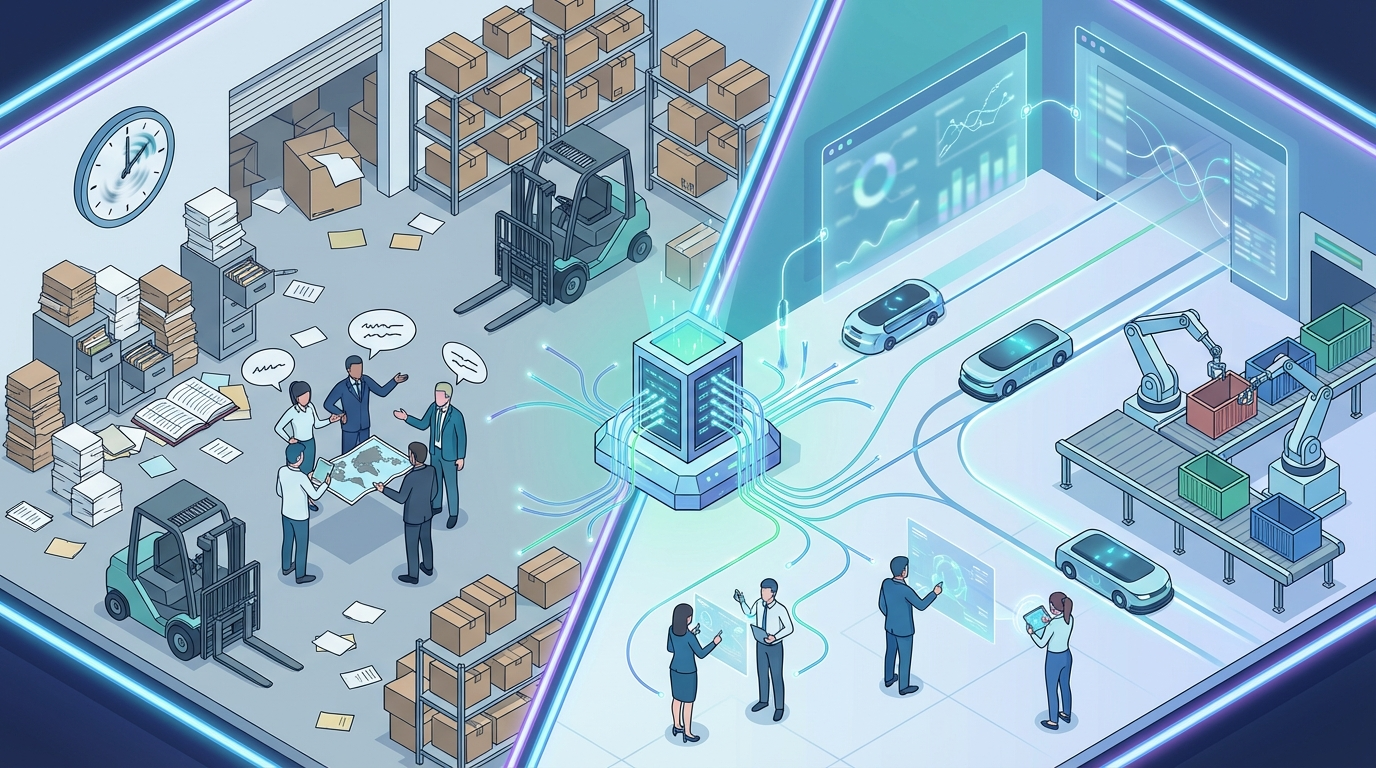
For logistics providers with multiple depots, growth is both an opportunity and a formidable challenge. As customer demands increase and operations expand, many organizations encounter a common bottleneck: an overreliance on ‘tribal knowledge.’ This informal, undocumented expertise—held by a few experienced staff—can keep the wheels turning day to day. However, it also exposes the business to risk, operational inconsistency, and limits scalable growth. As operations leaders in freight and logistics know all too well, the ability to standardize and digitize critical workflows is not just an efficiency play—it is a strategic necessity for future-proofing the business.
The Risks and Real Costs of Siloed Expertise
Relying on the intuition and memory of key employees may work for a single site or a close-knit team. But as logistics operations grow more complex—servicing new clients, adding routes, or scaling to national coverage—the cracks in this approach quickly appear. Disparate processes between depots cause inefficiency and confusion. Reporting lags as managers manually collate data from spreadsheets, emails, and phone calls. When an experienced staff member moves on or is unavailable, continuity falters and errors multiply.
This dependency on individual expertise presents several business risks:
- Continuity Risk: Knowledge loss when key staff leave or are absent.
- Inconsistent Service: Varying practices across sites erode brand promise and customer satisfaction.
- Margin Leakage: Manual errors and lack of transparency reduce profitability.
- Decision Delays: Outdated or incomplete data slows down tactical responses and board-level reporting.
Addressing these risks is not simply about efficiency. It is about building a resilient, competitive business that can adapt and thrive as it scales.
Digital Workflows: Building a Foundation for Standardized Operations
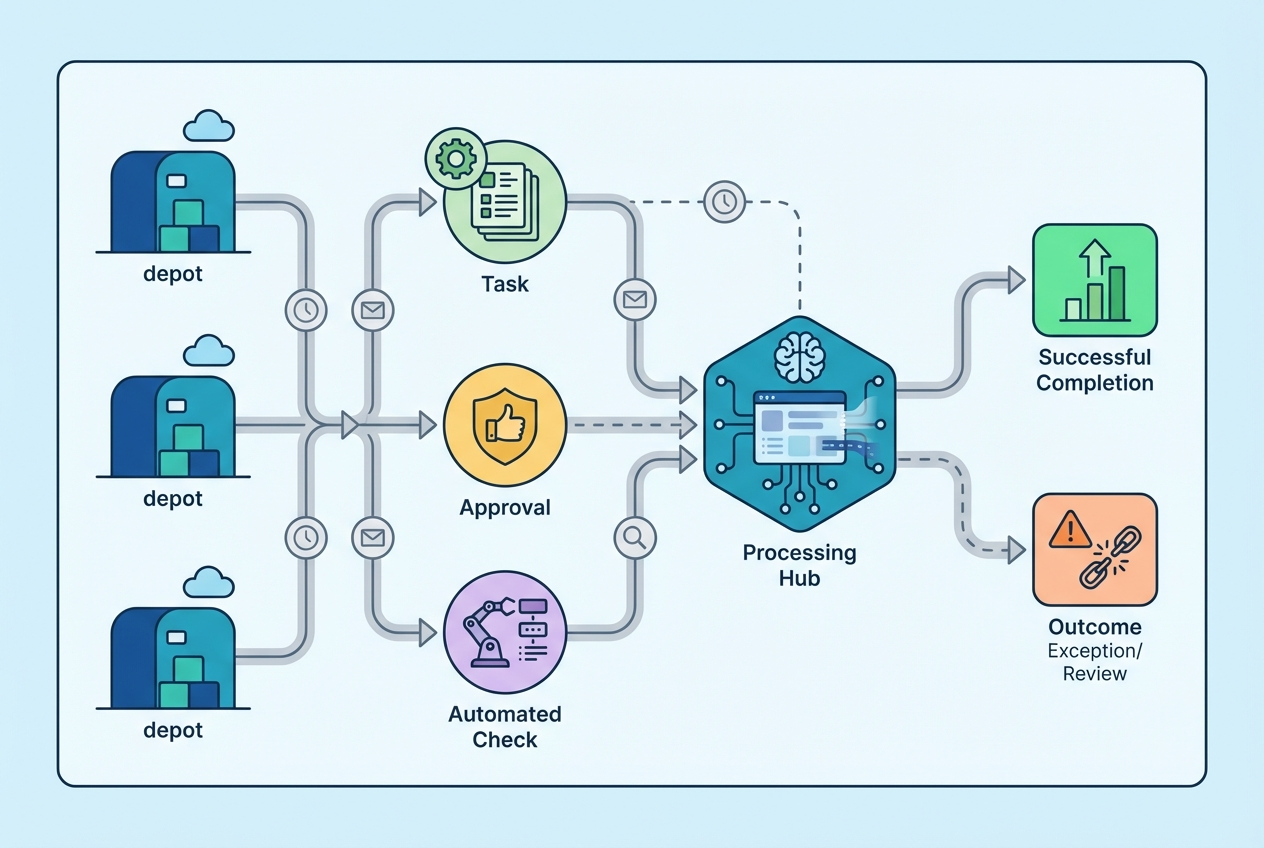
Digitizing depot operations transforms how logistics businesses operate day to day. By replacing manual workarounds and undocumented routines with standardized, codified digital workflows, organizations can achieve consistency, reliability, and visibility across all locations. This transition is the key to moving from reactive problem-solving to proactive management.
Digital workflow automation delivers:
- Process Standardization: Every team, in every depot, follows the same best-practice steps, reducing variation and promoting operational discipline.
- Real-Time Visibility: Operations leaders gain up-to-date insights into asset locations, driver performance, and service levels—critical for rapid decision-making.
- Reduced Reliance on Individuals: Knowledge is embedded in the system, not just in people’s heads. This lowers onboarding time for new hires and reduces business disruption during staff changes.
- Scalability: As new routes, clients, or depots are added, workflows can be quickly replicated and adjusted, supporting sustainable business growth.
How FreightTracker’s TMS Codifies Excellence Across Sites
A modern Transport Management System (TMS) like FreightTracker is purpose-built to address these exact challenges in the logistics sector. With centralized job management, live ETA tracking, automated rating, and drag-and-drop planning, FreightTracker’s TMS enables operational teams to eliminate ad hoc routines and unify their processes—no matter how many depots or how rapid the expansion.
Key capabilities include:
- Centralized Job Management: All jobs, routes, and shipments are handled in a single platform, ensuring every detail is logged and accessible.
- Automated Workflow Enforcement: Standard operating procedures are embedded into the TMS, guiding staff through every required step and ensuring compliance.
- Live Operational Visibility: Real-time dashboards allow leaders to monitor performance, spot exceptions, and intervene early when needed.
- Configurable Workflows: Unique depot needs or compliance requirements can be incorporated without losing standardization at scale.
By codifying expertise into the system, FreightTracker transforms tribal knowledge into institutional knowledge, accessible and actionable for everyone.
Complementary modules such as Milestone & Exception Management further enhance operational rigor by proactively tracking shipment progress and flagging issues before they escalate. Meanwhile, Finance & Automated Invoicing ensures that administrative accuracy is maintained as operational volume grows, and the Customer Portal provides clients with direct, real-time access to shipment information—reducing the burden on internal teams.

Driving Measurable Results: Continuity, Compliance, and Growth
Transitioning to digital operations isn’t just about technology. It delivers tangible business outcomes for logistics providers seeking to professionalize and scale:
- Improved Compliance: Achieve over 95% adherence to standardized workflows, ensuring consistency and reducing exceptions across all sites.
- Faster, More Accurate Reporting: Shift from weekly, manual reports to real-time operational dashboards, supporting data-driven leadership decisions.
- Reduced Error Rates and Margin Leakage: Automated checks and embedded best practices minimize manual errors, disputed invoices, and lost shipments.
- Business Continuity: Staff transitions no longer threaten operational stability, as processes are codified and knowledge is always at hand.
- Scalable Growth: New contracts, clients, and depots can be onboarded with confidence that performance standards will be upheld, without ballooning admin overhead.
These results translate into a stronger bottom line, enhanced customer satisfaction, and a sustainable platform for ongoing expansion.
Getting Started: Key Considerations for a Successful Digital Transformation
Taking the first steps towards digital excellence requires more than selecting a tool. It demands a clear vision, executive sponsorship, and a commitment to change management. Operations leaders should:
- Map Current Workflows: Identify where tribal knowledge is concentrated and where inconsistencies occur between sites.
- Engage Stakeholders: Involve depot managers, frontline staff, IT, and finance early to ensure buy-in and practical input.
- Pilot and Iterate: Start with a phased rollout, using FreightTracker’s TMS to standardize core workflows, then expand as adoption grows.
- Measure, Adjust, Repeat: Use live dashboards to monitor compliance, adoption, and performance—refining processes as data reveals new opportunities.
Digital transformation is a journey, but the risks of standing still are greater than those of moving forward. By systematically digitizing and automating depot operations, logistics providers can replace uncertainty and siloed expertise with a foundation of operational discipline and excellence.
Ready to move beyond tribal knowledge and unlock scalable, future-proof depot operations? Discover how FreightTracker can help you standardize, automate, and lead your team into the next era of logistics excellence.