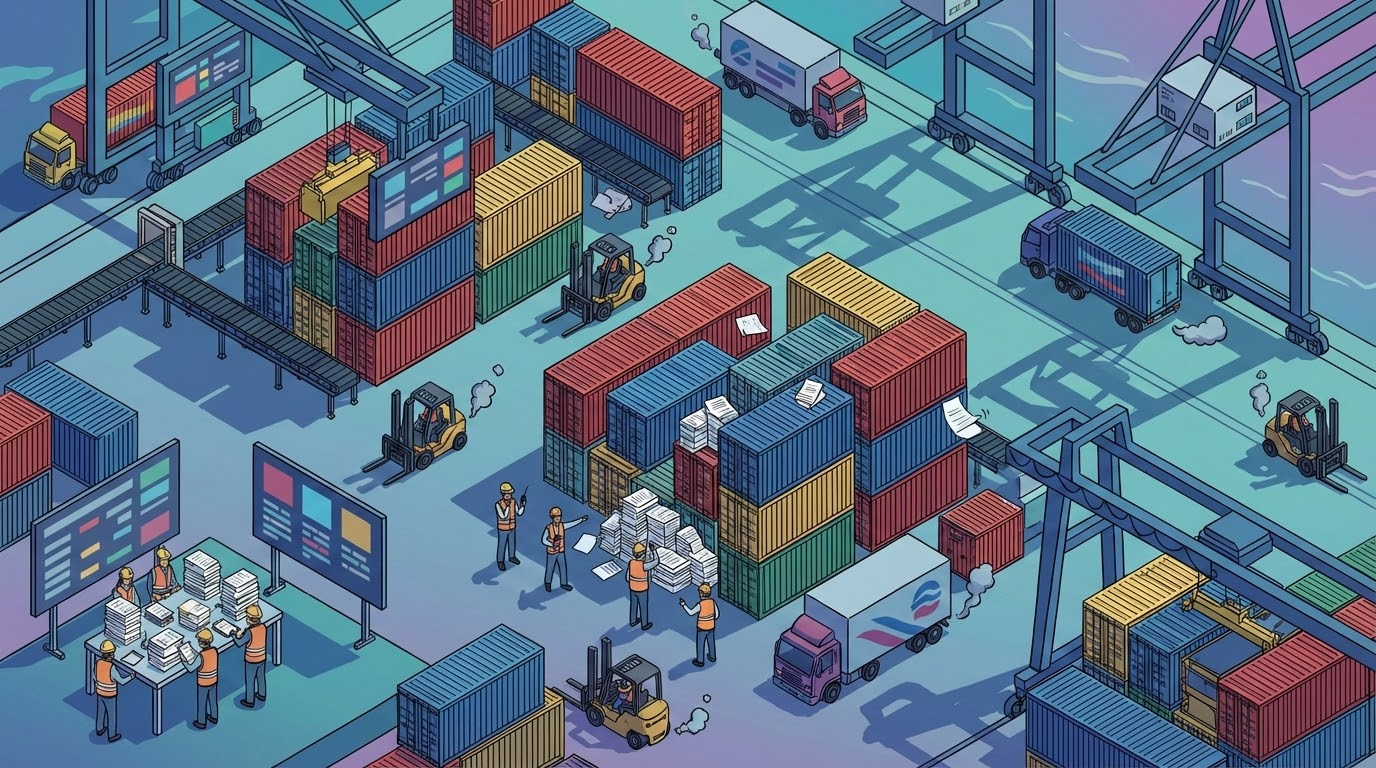
Introduction: Uncovering the True Cost of Manual Exception Handling
In high-volume container logistics, operational exceptions are inevitable. From delayed container pickups to last-minute yard congestion, operational leaders know that how swiftly exceptions are handled directly affects margins and service reliability. Yet, for many organizations managing multi-terminal operations, manual exception management remains the default. Spreadsheets, radio check-ins, and fragmented communication persist, especially during surge periods. This blog investigates the silent costs of slow, manual exception handling and explores how automation can transform operational control for container logistics providers.

Why Manual Exception Management Fails in Multi-Terminal Operations
Container logistics operations are inherently complex. Large-scale providers juggling multiple terminals must synchronize dispatch, yard movements, and customer commitments in real time. However, manual exception management introduces critical weaknesses:
- Fragmented Visibility: Exceptions flagged at one site may not surface quickly enough at others due to siloed systems and inconsistent reporting.
- Slow Response Times: Exception details often trickle in through manual logs, phone calls, or emails, slowing response and resolution—especially when volume spikes.
- Process Inconsistency: Teams develop workarounds unique to each terminal. This lack of standardization increases risk and dilutes accountability.
- Outdated or Unreliable Data: By the time exceptions reach decision-makers, they may already be outdated, reducing the opportunity for timely intervention.
For operations leaders overseeing ports or container yards, these weaknesses are more than an annoyance. They directly undermine core business goals—on-time delivery, compliance, and cost control.
The Impact on Performance, Margins, and Growth
The business impact of manual exception management goes far beyond lost time. Consider the following:
- Increased Demurrage and Detention: If delays are not flagged and resolved quickly, containers can accrue significant wharf storage costs. These penalties erode margins and damage customer relationships.
- Escalating Admin Hours: Operations teams report spending up to 30% more time per job on exception-related tasks when using manual processes. This inefficiency restricts the ability to scale without expanding headcount.
- Missed Service Level Agreements (SLAs): Inconsistent exception response leads to missed container moves and jeopardizes commitments to key customers.
- Limited Scalability: As organizations grow across terminals, manual processes buckle under volume, making it increasingly difficult to maintain performance standards.
- Employee Burnout and Turnover: Reliance on experienced supervisors to “spot and resolve” exceptions creates stress, especially during peak months. Burnout becomes a real risk, undermining team stability.
Ultimately, every hour lost to a manual exception is an hour that could have been spent on proactive planning, customer service, or process improvement. For organizations aiming to cut process hours by 30% per terminal or boost operating margins, these hidden costs demand attention.
A New Approach: Automated Exception Management for Container Logistics
Modern logistics demands a smarter, more scalable approach to exception management. Automation is not just a technology upgrade—it is a shift towards proactive, data-driven operations. Solutions like FreightTracker’s Milestone & Exception Management module address these pain points head-on.
By configuring shipment milestones and establishing automated exception alerts, operations teams can identify delays and disruptions before they escalate. Exception notifications are delivered in real time, allowing for immediate action. This shift eliminates the lag between an incident occurring and the right people being informed, regardless of location or shift.
Key Features Driving Efficiency and Control
FreightTracker’s Milestone & Exception Management module is purpose-built for the operational realities of container logistics. Key features include:
- Configurable Shipment Milestones: Standardize operational workflows across all terminals. Whether tracking inbound container arrivals or outbound deliveries, teams use the same process, reducing variability and risk.
- Automated Exception Alerts: The system flags missed milestones, delays, and compliance risks instantly. No more waiting for end-of-week reports or relying on manual checks.
- Delay Tracking and Proactive Notifications: Gain visibility into delays as they develop. The platform sends targeted alerts, enabling teams to reallocate resources or communicate with customers swiftly.
- Centralized, Real-Time Visibility: Exception data is unified in one dashboard, accessible to leaders and front-line teams alike. This eliminates information silos and supports faster, more informed decisions.
When combined with FreightTracker’s Transport Management System (TMS) and Container Transport Module, operations managers can further streamline dispatch, automate repetitive tasks, and prevent costly storage delays at the wharf. The result is a tightly integrated operational backbone that supports both day-to-day efficiency and long-term growth.

Measurable Results: Case for Embracing Exception Automation
What does this shift mean in practice for container logistics providers?
- Reduced Missed Milestones: Earlier intervention means fewer surprises and less scrambling to recover from service failures.
- Lower Demurrage and Detention Costs: Real-time alerting allows teams to rectify delays before penalties accrue, directly improving shipment profitability.
- Shorter Exception Response Times: Automated workflows have shown to cut exception handling times by up to 50%, freeing staff for higher-value activities.
- Improved Data Confidence: Reliable, real-time exception data supports more accurate reporting, better decision-making, and stronger executive confidence in operational KPIs.
- Simpler Scaling: With standardized, automated processes, adding new terminals or ramping up during peak periods becomes a controlled process—not a fire drill.
Case in point: logistics operators leveraging FreightTracker report cutting manual process hours by over 30% per terminal and achieving on-time delivery rates above 98%, even during seasonal surges.
Conclusion: Building Resilient, Scalable Logistics Operations
In a climate where customer expectations are rising and cost pressures are unrelenting, manual exception management is no longer sustainable for container logistics providers. The hidden costs—lost margin, wasted time, eroded trust—compound as operations expand across terminals and yards. By embracing automated exception management through platforms like FreightTracker, operations leaders can achieve real-time control, standardize workflows, and unlock efficiencies that drive both competitiveness and resilience.
For organizations intent on demonstrating operational excellence and poised for growth, now is the time to reimagine exception management. Turning operational exceptions from a costly liability into a source of strategic advantage begins with the right technology foundation.